OTLove
by Ana Sucaldito
Dr. Hopkin
English 2367.05
Spring 2017
Presentation of Subject
Off the Lake Productions, more commonly known as OTL was, and is, Ohio State’s only student-controlled, service-based theatre group. OTL is best known for their annual fall cabaret and their spring musical, where entry to either is a canned good for the Mid-Ohio Food bank or $1.00 donated to Boys and Girl Club. Additionally, the group puts on peer theatre productions, which are audience interactive performances that tackle sensitive topics, such as racism and homophobia in the residence halls. Although all of these facets reflect a unique organization, members will tell you that their standout characteristic is OTLove. OTLove is an “overarching concept” that refers to the group’s mindset to all have a welcoming, close, and supportive community (Fousanon 26). This project will be aimed at researching the traditions with OTL and how they shape the community within it.
Description of Relationship to Subject
I remember vaguely passing OTL’s booth at the Involvement Fair, but only remembered its name when my freshman-year roommate, Haley, joined the group. My first formal introduction to the group, however, came when I joined the executive board of MUNDO, a multicultural and social justice organization on campus. Both MUNDO and OTL were part of the “Big Six,” now called the Involved Living Organizations (ILOs), which are the six student organizations affiliated with Housing at Ohio State. Since our first combined fall retreat, I constantly interact with OTL on an organizational level, as we support and advertise each other’s events, and when possible, collaborate on similar projects. On an individual level, I have met and become friends with many OTL members, such as Haley, Josh (a former OTL member who joined MUNDO), and Andrew (a former MUNDO member who joined OTL).
Since the beginning, I’ve viewed OTL as the road not traveled. As someone who used to be super involved in theatre since second grade, I often wonder how my college life would have been different if I had continued to be involved in theatre, so I was excited to look at this group. Among my many decisions to not do theatre in college was the fear of isolation. I lost the sense of community that made theatre fun when I moved from North Carolina to Ohio, as the new production companies I worked with were very clique-y and competition. After meeting OTL’s boisterous, friendly executive board in sophomore year and hearing about OTLove, I began to view OTL as the full theatre package, complete with a focus on friendship that I lacked in Cincinnati. These rose-colored glasses affected much of my initial thoughts about OTL. It wasn’t senior year that I began to hear gossip that undermined this perfect image as my best friend (a Theatre major), began to tell me of the defection of longtime OTLers and their negative thoughts about the organization. It painted a sight that was far more political, catty, and dirty than the one I had held in my mind. Now, I want to sift through my idealized OTL and the gossiped-about OTL to the reality in between.
Presentation of Research Question and Thesis
When looking at OTL’s over a hundred members, a common thread emerges: these are theatre kids, but not kids currently pursuing theatre careers. Most are not theatre majors; instead they span the range from chemical engineers, to entrepreneurs, to English majors. As such, OTL is not a place to build professional experience or pad a resume, yet it still manages to keep a constant general body and bring in members each year. In fact, it’s growing. With no professional benefit and the extreme time commitment required (15-40 hours a week), how does it manage to hold onto so many students?
The answer seems to be its aforementioned community, OTLove and how connected a student feels to the organization. It seems like the more a student participates in its traditions, which double as social activities, the more connected they feel to the organization and the more likely they are to return. The opposite seemed also true: in my interviews, those that left or doubted their return cited feeling a lack of strong community as one of their main reasons.
With such an important role in the organization, my main research question was what traditions does OTL have and how do they affect the OTL culture and experience? Over my interviews with past and present OTL members, I learned that their traditions served as their main community-building tools, creating that sense of OTLove that many cite as the best part about the organization and the main factor of why they return. The traditions serve multiple purposes, from promoting bonding (like BrOTL, OTLadies, OTLove), reestablishing harmony (i.e. New Member Retreat), celebrating each other (i.e. kudOsTL, spOTLight, Secret Buddies and mini Cabs) and savoring the time spent together (i.e. Circle). Together, these traditions foster a unique community that bonds people together, creating OTL’s group identity.
Description of Methodology
I used a couple methods to learn about OTL. The first was pure observation. My first field site was the rehearsals for OTL’s spring musical, The Adams Family. Due to rehearsals being generally closed to the public, I emailed their director ahead of time in order to gain permission to watch. Unfortunately, I was only able to attend one two-hour rehearsal, and due to the timing of the rehearsal (right before Tech Week), I was not able to interact with any of the cast or crew members. My second, and main, method of learning about OTL was interviewing its members, past and past. When choosing interviewees, I tried to get as many perspectives as possible, pulling from the different sub-groups of OTL (cast, crew, pit, peer theatre, etc.), different roles, and different levels of experience with the groups. I was able to find all of my main interviewees through personal contact, either from this English class, or through past relationships.
Disclosure of "You"
When approaching this project, I have both an insider and outsider perspective. My previous experience doing musical theatre from elementary school to high school means I connect easily as a fellow “theatre kid.” I know what Tech/Hell Week, feels like; I know how long rehearsals can be; I know the rush of opening night and the tears at closing. Additionally, being involved in the ILOs means I know the basic framework of how OTL works, and am well acquainted with their pillars, programs, and long-term goals. At the same time, I’m an outsider. I’m not a member, and although I know much of their big-picture goals, I don’t know what membership entails on an everyday basis, or the specific emotions OTL brings out.
OTL Traditions
Almost all of OTL’s social events/activities stem from traditions---at least, that’s the way it seems. Everything from their major party schedule to their social page seems impacted in some way by traditions, and as such, there are so many that I felt the need to divide them into categories.
The first category consists of the practices that celebrate each other: spOTLight, Secret Buddies, mini Cab(arets), and kudOsTL. SpOTLight is a variation on the game, sniping played in Groupme and Snapchat group. It involves taking candid shots of members in everyday settings, such as on the bus, in class or walking on campus, without their knowledge and sharing it on the SpOTLight Facebook pages (otherwise known as the social page).
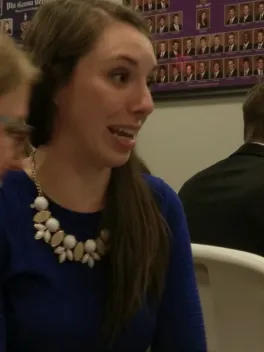
Secret Buddies involves being secretly paired with another member from cast, crew, or pit and getting gifts for them throughout the Tech Week to “make Hell Week less hellish” (Palm 23). Mini cab(arets) are held monthly and are where members perform solos and songs for each other, while kudOsTL is a game played at mini cab(arets) where members can write anonymous complimentary notes to each other. Notes can be anything from “kudos to so-and-so for singing their heart out tonight during rehearsal!” to “kudos to X for a sexy costume” (Fousanon 27). KudOsTL takes on a slightly different form at parties---they are now “sober,” “drunk,” and “wasted” kudOsTL. Depending on a student’s level of inebriation, they put their kudOsTL in the appropriate bag---thus, an incredibly drunk person will put the kudOsTL they wrote in the “wasted” bag, while someone who has had no alcohol will put their kudOsTL in the “sober” bag. These notes are later typed up by Community Chair and shared throughout OTL via the spOTLight/social Facebook page. Although the kudOsTL traditions is older, the sober/drunk/wasted spin on the tradition was started two years ago by Josh has resulted in notes that are often more risqué, and more humorous (Fousanon 27, Palm 25-26).
The second category of traditions all revolve OTL’s major parties. Off the Lake has certain parties that happen every year for the spring musical. During opening week, the first party is always dry, and consists of Murder in the Dark in someone’s home, while the second party (which is after the second show) is a normal drinking party. The second weekend, again, starts with a dry party. The second weekend’s dry party is always a board game night, while the final party after the last show is always a drinking party. The major traditional drinking party, however, is OTLove.
OTLove actually begins at New Member Retreat. During retreat, which introduces members to each other and the organization, the same icebreaker is played every year, in which the names of one half of various famous couples are placed on people’s back (i.e. Beyoncé and Jay-Z, peanut butter and jelly) and students have to find their partner. After finding their pairs, students then spend time creating matching costumes that are then worn at OTLove, and showcased at the fashion show during the party. OTLove was the only tradition that first-year Evan Shaw participated in, where he participated in a three-way “Supernatural” themed pair, attending the party dressed as the TV character, Castiel (Shaw 31).
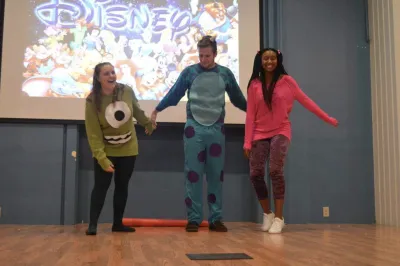
Men and women pregame separately at BrOTL and OTLadies before heading to the main party, OTLove. This party has been lovingly described, more than once, as a “shitshow” (Fousanon 26, Palm 23). Held halfway through rehearsals, it’s a time “where everyone is making out, everyone is loving on each other” (Palm 23) and generally has a good time.
The last category of traditions all involve savoring and reflecting on the time spent together, and can be lumped together at the ending event of Circle. Taking place before the closing show of the spring musical, Circle is a time for appreciation, for reflection, for community. Ordered youngest to oldest, everyone gathers round and, one by one, shares what OTL has meant to them this year. “You go around and talk about your feelings. But it’s really nice. It’s really for the seniors because they go last and they talk about their OTL experience and how much it means to them, and all that stuff that sounds really dumb when you’re outside of Circle, but when you’re inside it’s really meaningful and really cool” (Shaw 31). Paper plate awards, individualized awards often based on inside jokes, are given out, and everyone reads their letter to themselves, written at New Member Retreat before the show began, to see how they have changed or grown. Circle serves to allow everyone to say goodbye to the show, to each other, and, for the seniors, to OTL as they start the new chapter of their lives.
Analysis of Community and Tradition Link
I claimed earlier that OTL’s community is built upon its traditions, which serve as vehicle for increased bonds and retention of older membership. In order for this to be true, the majority of OTL must be participating in its traditions in order to make enough of an impact to build a group identity and community. What makes students continue to participate in these many traditions?
Lisa Gabbert’s findings in “Relations of Self and Community: Participation and Conflict in Winter Carnival” helps explain this (Gabbert 37-67). Gabbert found that participation in traditions comes from many factors, such as guilt and social pressure, but the main motivator is a sense of civic duty. The tradition’s participants feel that the act of participation itself is part of being a good community member, and that their participation improves the group as a whole. Like the traditions in Gabbert’s work, OTL traditions are considered part of the community fabric itself and not participating is an action that places members outside of that fabric.
Once students participate OTL traditions, they are more likely to see themselves as part of the group and more likely to return. The mediating factor that makes more traditions lead to a greater sense of being part of OTL is interaction. Shaomian and Heere explains how this occurs in their paper about theatre loyalty (Shaomian and Heere 13-36). These two authors found that patron loyalty to theatre companies is built upon increased levels of interaction, as well as the ability of the theatre group to create a distinctive branded identity. According to this theory, increased interaction with other OTL members build community and loyalty to the group that will lead to repeat membership from year to year. OTL traditions allow for this interaction, as each traditions involves group bonding and interaction. Not a single one can be done by one person alone. These interactions allow for members to get to know each other better and cement bonds, leading to recognition.
Arvanitakis’s work with war veterans in his Maralinga paper adds a caveat to Shaomian and Heere’s thoughts about community as he believe that the strongest communities are based on desire, rather than interaction and recognition (Arvanitakis 295-306). He does, however, acknowledge that interaction and recognition can create communities as well. The nature of OTL’s traditions requires members to get to know each other more, allowing for more opportunities to recognize their inherent similarities additionally, the nature of these traditions create a central group identity, one focused celebration and bonding, symbolizing affectionately by the concept of OTLove. By building bonds between members, OTL ensures that its members are more likely to return the next year. This explains much of why members who do not participate often, such as Evan Shaw, do not feel as close to OTL and are more likely to contemplate leaving.
Cracks in the Community
The cracks in OTL’s community can be explained by these theories as well. One of the main finding brought out by this study is that, while it’s true that OTL places a higher priority on community than some other organization, it’s not as perfect as I first perceived it as a sophomore. It works just like other student organizations, with power struggles, cliques and drama that can damage the sense of camaraderie. Josh asserts that issues stemming from being on the executive board are the reason he left OTL after three years of membership. “The sense of community didn’t transfer to e-board . . . . It’s a lot of big personalities and everyone wants to be in power” (Fousanon 29). He found that after joining leadership, power struggles between those in different positions left him lonely and damaged his friendships with those he had been close to previously when they were all in general body. This is where Arvanitakis’ point about desire being stronger than recognition comes up. Although the members of OTL’s leadership team may have recognized each other as similar, and had high levels of interaction, their community spirit was weakened. This was because their desire to be a community was weakened in the face of their desire to push for their own way and exercise their own power, ultimately weakening any previous bonds.
Another factor that can take away from the cohesive sense of community is the separation into cliques made via function: cast, crew, pit and peer theatre. These cliques can lead to internal tension, which usually doesn’t affect the final show, but does damage the group morale OTL actively tries to foster and can keep current members from returning next year. The above cliques are functionally separated, decreasing interaction between the three, which is one of the main components in building community, according to Shaomian and Heere. Recognition also plays a role here, as the cast, crew, pit and peer theatre are more likely to find closer similarities within their own groups rather than outside of them, leading to more recognition within groups, forming these cliques and separating OTL as a whole.
While cast and crew spend large amounts of time together backstage, in rehearsal and set builds, the orchestra pit often ends up on the outskirts of OTL as their rehearsals happen in different times in different buildings. As a result, “pit is like the weird step-child of OTL. Kinda like that odd cousin that you see like at family reunions, but never the rest of the time” (Palm 22). Pit members often don’t feel as included in the group and much less likely to participate in OTL traditions and community events. In fact, pit has built a miniature culture in their relative isolation. This formation of internal traditions is not seen in cast or crew. The pit’s culture could be a paper within itself, with numerous inside jokes, special hangouts and rituals. This internal sense of community, however, can add to their isolation from the larger group—the more they pull together, the farther they pull from the larger group. Their internal traditions can conflict with larger OTL traditions. For example, pit has a tradition of getting dinner together before the last show, as a last hurrah. This makes it the same time as the OTL-wide tradition of Circle. As a result of this conflict, pit members are rarely present for the bond-solidifying last tradition, further signifying their schism. Gabbert’s reasons for participation further informs why pit members do not participate in these group-wide traditions (Gabbert 37-67). Due to their relative isolation from the rest of the group, they have less guilt, less social pressure and less obligation to and from the rest of the group to motivate their participation. In fact, their social obligations is contained to pit members, rather than general OTL, and so their civic duty is not participating in group-wide OTL traditions and instead participating their own smaller traditions, such as pit dinner, strengthening their own smaller group bonds.
Conclusion
Compared to many disciplines, success in theatre is heavily reliant on community. In an office setting, you can fulfill the project without close relationships; in a research lab, you rarely need to interact with your fellow researchers. But putting on a successful production requires constant participation, constant interaction, lots of emotion and lots of time. With OTL being completely student-run, it makes total sense that community is actively cultivated. Without it, the show won’t be strong, the members won’t return, and the joy of participation is lost. Off the Lake’s many traditions serve different sub-purposes, but in the end, they all come together to create a sense of family and of home—one that is not infallible as I originally thought, but certainly one that is strong.
From my viewpoint, Circle is the physical embodiment of everything I’ve learned about OTL over this journey. Emotional, messy, complicated. The stories I’ve heard have their ups and downs, just as sometimes negative experiences come out in Circle, whether due to a loss of friends, tensions between those in leadership, or other issues. Disorganization arises, due to everyone crying, going over time, or sharing conflicting experiences, but the show goes on. From descriptions from informants, OTLove and its traditions seems to become more and more meaningful as you spend more time in OTL, becoming less of an audience member, and more a player on the stage. These traditions are a quick snapshot of OTL culture, a culture that is emotionally impressive, messy, and made up of friends.
Work Cited
Arvanitakis, James. "Staging Maralinga and looking for community (or why we must desire community before we can find it)." Research in Drama Education 13.3 (2008): 295-306. EBSCOHost. Web. 10 Apr. 2017.
Bracken, Jillian. "In their own terms, on their own terms: Capturing meaning in community musical theatre cast member e-journals." International Journal of Community Music 8.3 (2015): 297-315. EBSCOHost. Web. 10 Apr. 2017.
Fousanon, Josh. J.F. Interview. Ana Sucaldito. 22 February 2017. In-person Interview.
Gabbert, Lisa. "Relations of Self and Community: Participation and Conflict in Winter Carnival." Winter Carnival in a Western Town: Identity, Change, and the Good of the Community. Logan: Utah State U Press, 2011. 37-67. Project Muse.
Hughes, Jenny, and Karen Wilson. "Playing a Part: The Impact of Youth Theatre on Young People's Personal and Social Development." Research in Drama Education 9.1 (2004): 57-72. ERIC. Web. 10 Apr. 2017.
Shaomian, Armen, and Bob Heere. "The Path to Loyalty Among Theater Patrons: The Importance of Interaction and a Sense of Brand Community." MEIEA Journal 15.1 (2015): 13-36. EBSCOHost. Web. 10 Apr. 2017.
Shaw, Evan. E.S. Interview. Ana Sucaldito. 7 March 2017. In-Person Interview.